
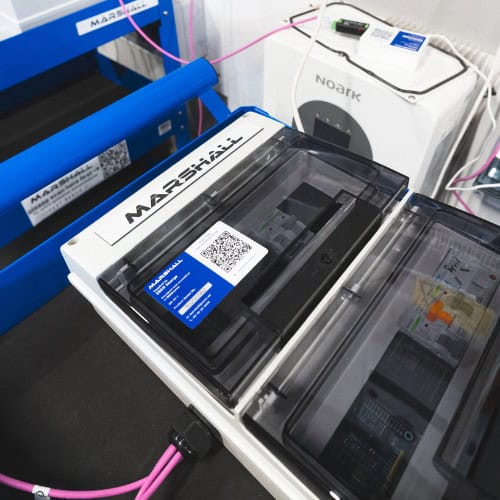
As DNSP requirements continue to evolve, one of the more common challenges facing installers is what to do with sites that already have older solar infrastructure in place. A homeowner may want to expand their system, replace part of it, or add a new CSIP-compatible inverter, only to find that the existing legacy inverter creates a compliance problem.
The issue, primarily, is not that the original system has stopped working. It is that the older inverter was never designed to operate within the control framework now required by DNSPs and a client now seeks an updated system. If the inverter is not listed appropriately, or cannot be coordinated properly alongside a new CSIP-compatible inverter, installers can be left with very few workable options. Too often, that leads to the assumption that the existing solar system needs to be removed before anything new can be added.
Our Marshall solution offers a more practical way forward.
Rather than treating the whole site as an all-or-nothing replacement, Marshall allows the new CSIP-compatible inverter and the existing legacy inverter to be managed in different ways. The new inverter is controlled for generation and export in line with DNSP CSIP requirements, while the legacy inverter is managed separately through a contactor or DRM0 port.
In practice, Marshall first responds to site export conditions by reducing output from the new CSIP inverter. If the site is still exporting above the required dynamic export threshold, Marshall then places the legacy inverter into standby, stopping production from the older system only when needed. This creates a structured control hierarchy across the site, rather than leaving the two inverters to operate independently or in conflict.
The value of that approach is straightforward. It can allow a new compliant inverter to be installed alongside an existing legacy inverter without automatically forcing the customer to decommission their original solar system. For installers, that means a more workable upgrade pathway.
For customers, it can mean lower replacement costs, less waste, and a better chance of retaining value from infrastructure already on the roof.
Finding a controlled, practical method for integrating legacy equipment into a site that now needs to meet newer compliance expectations is all part of ZECO Energy’s vision of making renewable energy accessible to all.
Marshall helps installers and homeowners alike by providing a way to work more selectively and intelligently with what is already there.
For technical enquiries or installation support, contact marshall@zeco.au or technicalsupport@zeco.au
ZECO Marshall is a dynamic export control and energy management product that optimises solar energy usage. It allows flexible energy exports, supports load control, and integrates with solar inverters, energy meters, and smart devices through our unique hardware and software solution.
ZECO Marshall is used for:
ZECO offers three main Marshall products:
Marshall Lite – A compact, essential-feature version for dynamic export control.
Marshall Blackbox – Comprehensive control and monitoring capabilities, includes a single-phase meter.
Marshall Blackbox Ultra – Includes an integrated three-phase meter for detailed energy insights.
ZECO Marshall supports most major inverter brands and is compatible with SAPN, ENERGYQ, and Victorian DNSPs (AusNet, United Energy, Jemena, Powercor, Citipower).
Overload Control prevents household and commercial overload by monitoring energy import amperage. If the current exceeds the main switch rating, ZECO Marshall trips non-essential loads to keep the system within safe limits. This feature is particularly useful for preventing residential system trips.
ZECO Marshall devices are designed for easy installation. Refer to the installation manuals for more details. They can be connected via LAN, Wi-Fi, or RS485, depending on the setup. A licensed installer should handle the installation to ensure proper integration and compliance.
While an internet connection is recommended for real-time monitoring and firmware updates, ZECO Marshall can operate in a local network environment with limited cloud dependency.
Yes, ZECO Marshall devices are Clean Energy Council (CEC) certified, Australian Made and comply with relevant Australian energy regulations for export control and metering.
Users can monitor and control Marshall devices through our web portal or mobile app, allowing access to energy data, export settings, and load control features remotely.
Yes, Marshall supports both residential and commercial solar installations, making it ideal for larger energy management applications.
For support, you can contact ZECO Energy’s customer service team via phone, email, or the official support portal located at the top of this page. Firmware updates and troubleshooting guides are also available at the bottom of this page.
Email: support@zeco.au
Phone: 03 4422 4455

