
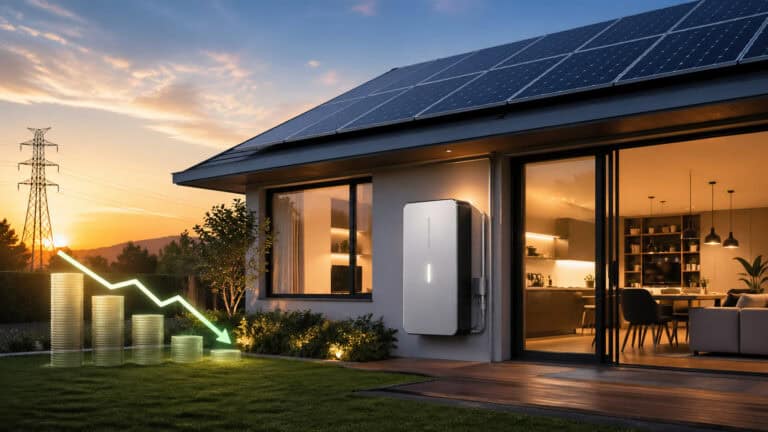
The decision to add a battery to your solar system is one of the most significant decisions you can make for your future energy bills, but just how much can it save you? The answer varies depending on how much energy you use, what your current tariff is, and whether you are eligible for government rebates. What we can tell you is this: the right combination of solar and battery can save you up to 95% on your electricity bill. This guide will explain how it works, what you can expect, and what to look for when choosing a system.
Without a battery, solar panels will only help you when the sun is shining, which is often when you are not home. You will produce electricity during the day, but if you are not using it in real time, you will either sell it back to the grid for a low feed-in tariff or waste it. This is called solar soaking, where you adjust your habits to use appliances during the day when solar is available.
With a battery, you can store excess solar energy and use it in the evening, when electricity costs are highest.
Up to 95% reduction in electricity bills with a right-sized solar and battery system
Battery payback period: 6–10 years for most households
Total lifetime savings: thousands of dollars over the battery's 10–15 year lifespan
Evening usage covered: batteries typically store 5–15kWh, enough for most households' evening and overnight needs
Avoiding peak tariffs: Electricity is most expensive between 4 pm and 9 pm. Using stored solar energy during this time helps avoid high grid costs.
Replacement of feed-in tariffs: In Victoria, feed-in tariffs are often as low as 3–5 cents per unit. Using stored energy at night instead of exporting it at low rates (then buying at 30–40 cents) delivers higher value.
Blackout protection: Some batteries provide backup power during outages, adding reliability benefits beyond cost savings.
Rising cost of electricity: Electricity prices are expected to increase in Australia, making self-consumption of solar energy more valuable over time.
Households in Victoria may be eligible for the Solar Homes rebate program, which can significantly reduce the cost of installing a solar and battery system. ZECO’s team can assess eligibility during your consultation.
Yes — especially for homes with solar panels and moderate to high evening usage. The key is correct system sizing. A battery that is too small will not cover evening demand, while an oversized system may be underutilised.
ZECO’s energy assessments are based on real usage patterns to ensure the system is sized correctly for your needs.
This depends on the size of the solar battery, the cost of electricity, and the amount of energy used by the house. Households with high evening peak demand and a time-of-use tariff structure generally achieve the largest savings, which can be as high as $1,500-$3,000+. With a solar battery, the overall cost of electricity can be slashed by as much as 95%.
In Victoria, the solar battery payback period for most homes will be 6-10 years. This can be minimized with government rebates, high self-consumption rates, and for homes that have already maximized solar use during the day.
Yes, some solar batteries can be used during a blackout, while others cannot. This should be a key factor in deciding which solar battery to buy, and ZECO can help you with this information.
Generally, yes, as ZECO will assess your current solar system to determine the best solar battery option for you.



We're always working to understand how we can better serve our clients.